

If your business still sends emails from noreply@yourcompany.com, it is time to stop.
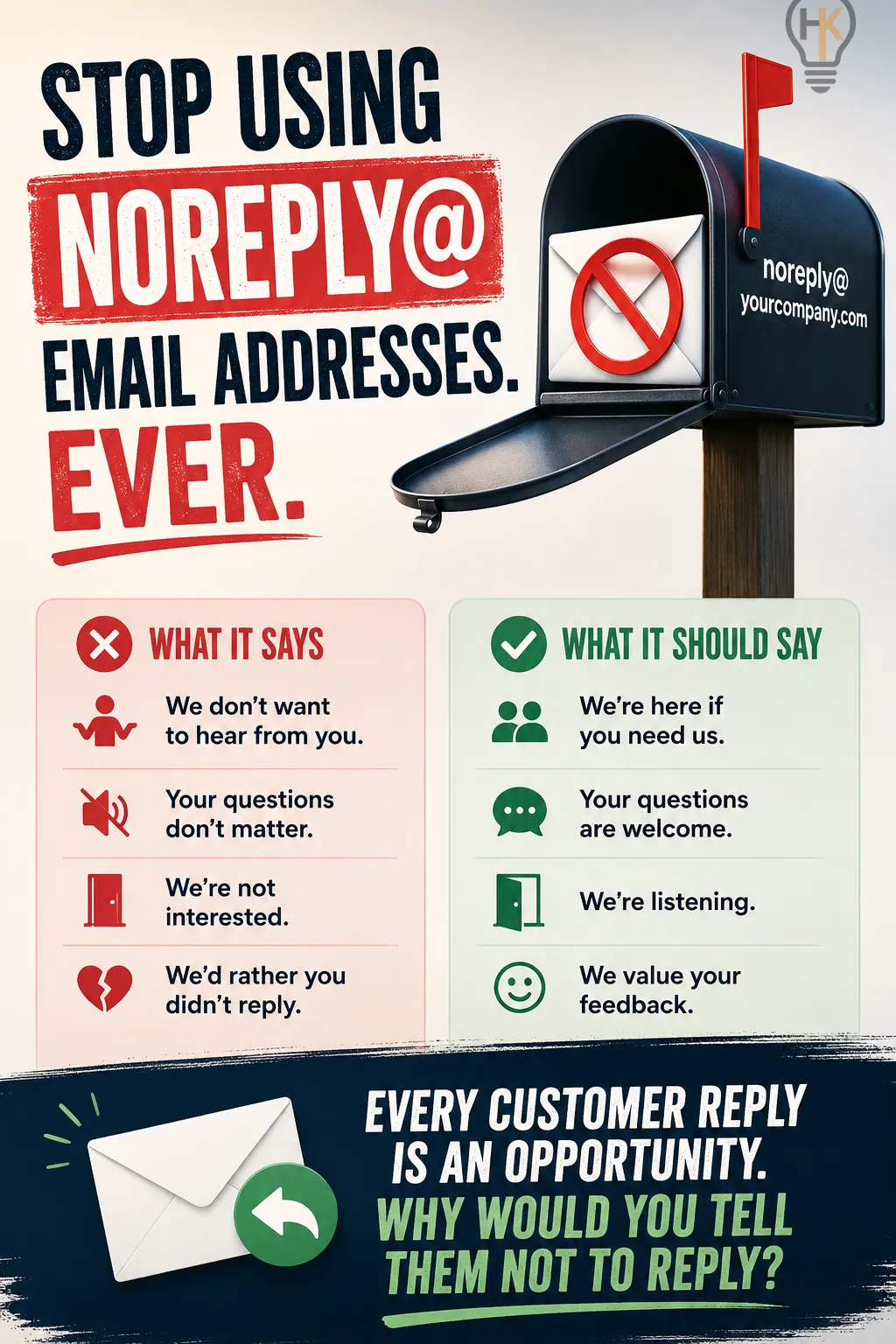
It might seem like a small technical detail, but to your customers it sends a very clear message:
“We want to talk to you. We just don’t want you talking back.”
That is probably not the impression you want to leave.

 Every Email Is A Conversation
Whether you’re sending an invoice, an order confirmation, a password reset, a support update or a newsletter, there is one thing they all have in common.
They are communication.
Communication is, by definition, a two-way street.
The moment you deliberately remove the ability to reply, you turn a conversation into a broadcast. You make it harder for customers to ask questions, report mistakes or simply thank you.
Why would you willingly put a barrier between your business and your customers?
Imagine This In Real Life
Imagine walking into a shop.
An employee walks over, hands you a receipt, tells you about a special offer, then immediately turns around, puts on headphones and walks away before you can ask a question.
You would think they were rude.
That is exactly what a noreply address does.
The Worst Part? Bouncing The Reply
Some companies go one step further.
Not only do they use a noreply address, they configure it so every reply immediately bounces back with a message saying the mailbox isn’t monitored.
From a customer’s perspective that feels awful.
They took the time to respond.
Perhaps they spotted a mistake.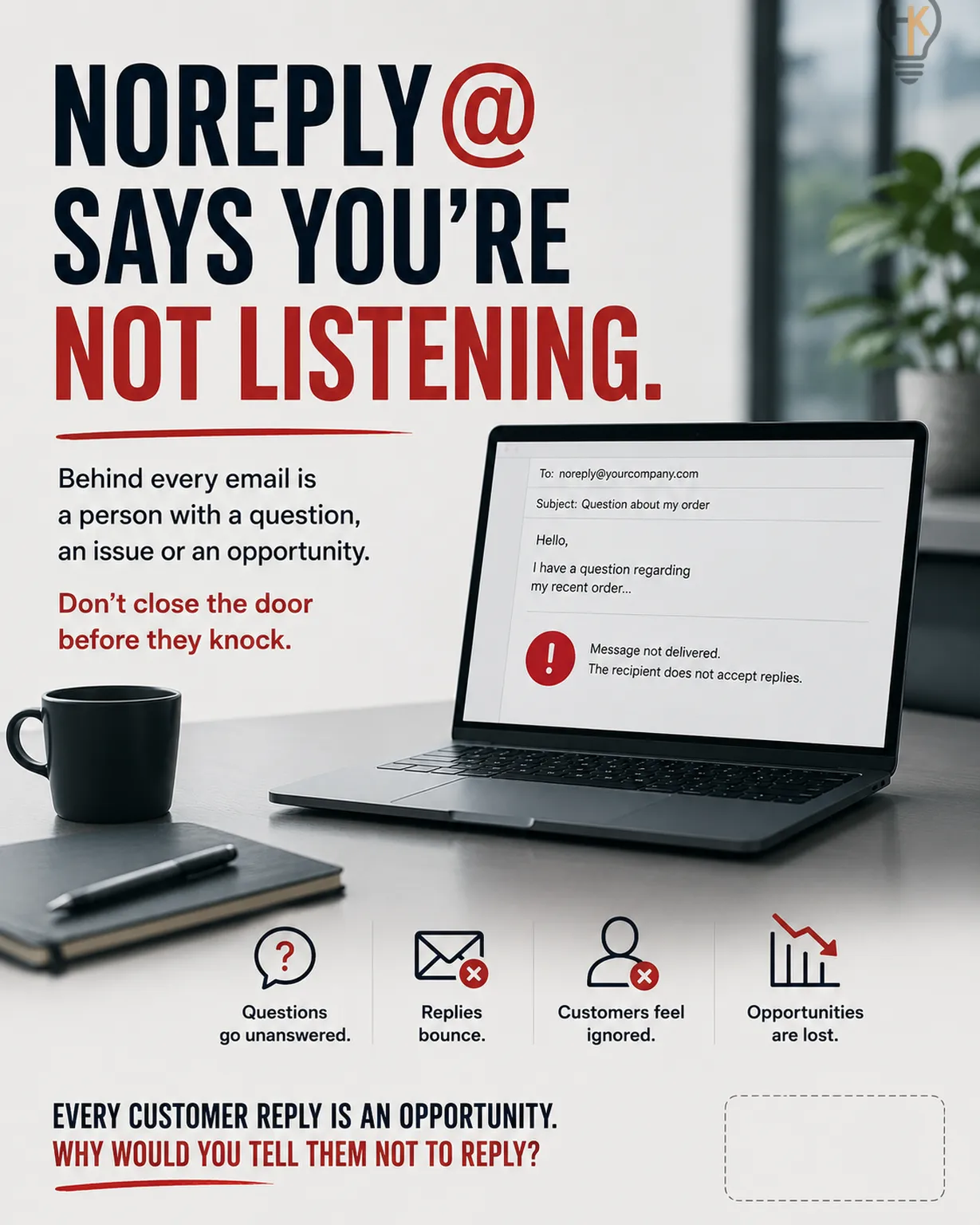
Perhaps they had a genuine question.
Perhaps they wanted to place another order.
Instead, they receive an automated rejection.
You’ve just told someone who wanted to engage with your business that you are not interested.
That is hardly the customer experience most companies are trying to create.
Customers Don’t Care If The Email Was Automated
One of the biggest misconceptions is:
“That email was sent automatically, so nobody needs to reply.”
Customers don’t think like that.
They simply see an email from your company.
If it contains incorrect information, they want to tell you.
If they have a question, they naturally hit Reply.
That is how email has worked for decades.
Expecting customers to notice a tiny line saying “Please do not reply” is unrealistic.
You Might Be Throwing Away Sales
Replies are often opportunities.
Customers reply with:
- Questions before buying
- Requests for upgrades
- Billing queries
- Delivery changes
- Product feedback
- Partnership enquiries
- Referrals
- Compliments
Every reply is engagement.
Blocking replies means some of those opportunities simply disappear.
It Also Damages Trust
Businesses spend thousands on branding.
They carefully design logos, websites and marketing campaigns.
Then they send emails from noreply@…
It immediately makes the business feel less personal.
Less approachable.
Less human.
Ironically, many companies spend years trying to appear more customer-focused while using one of the least customer-friendly email practices imaginable.
“But We Don’t Want Our Inbox Flooded”
This is the most common argument.
It is also the easiest to solve.
Use a mailbox that is monitored.
Route emails to the correct department.
Use filters.
Create helpdesk tickets automatically.
Set expectations with an auto-response if needed.
Modern email systems make all of this straightforward.
Ignoring customers is not a technical solution.
It is simply avoiding the problem.
Better Alternatives
Instead of:
consider using:
- hello@
- support@
- team@
- customerservice@
- info@
- accounts@
- billing@
Even if replies are handled by a team rather than an individual, customers know someone is listening.
That makes all the difference.
Every Reply Is A Chance
Som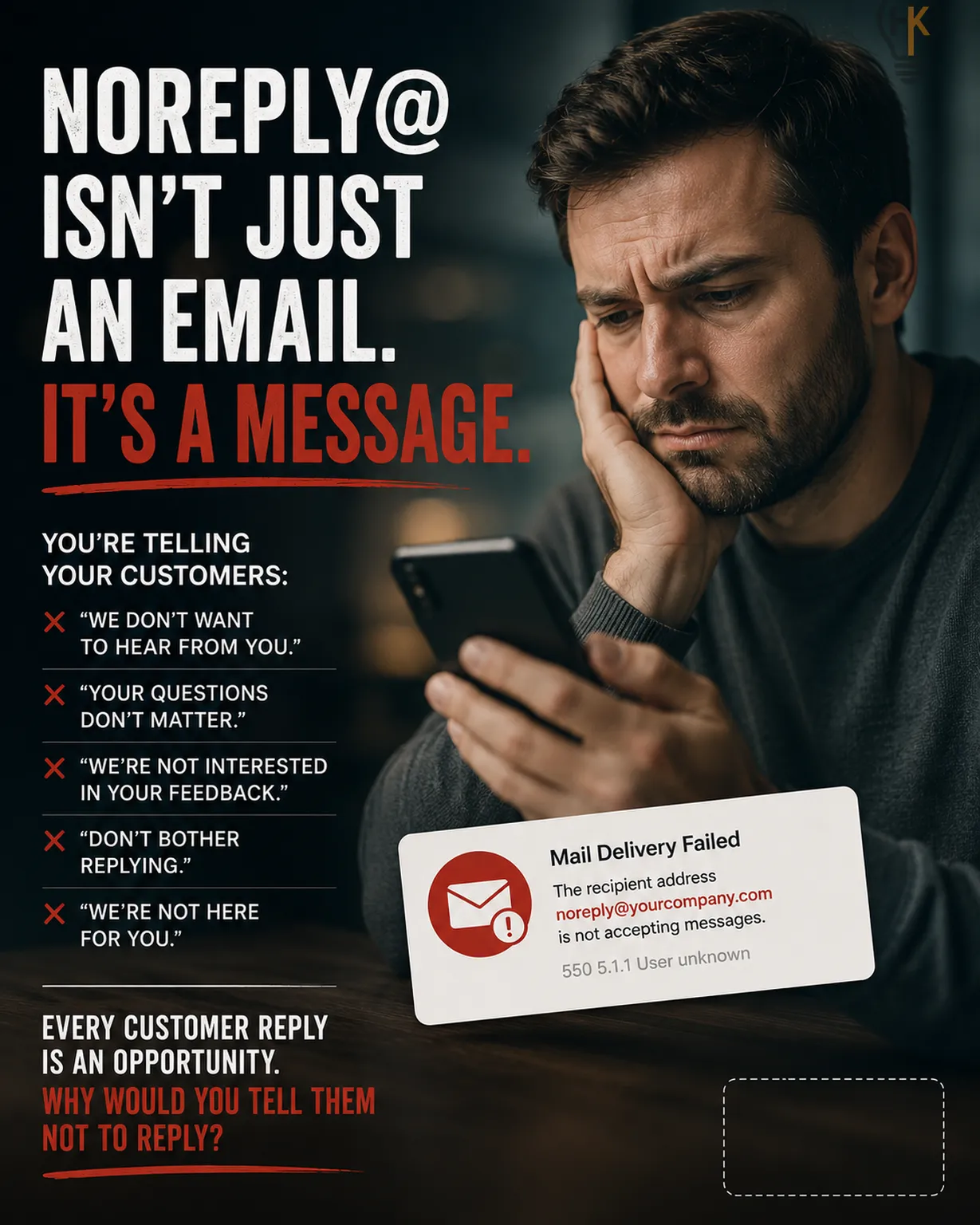 e replies become support tickets.
Some become bug reports.
Some become testimonials.
Some become your next sale.
Some help you improve your products.
Some save you from making the same mistake hundreds of times.
Every reply contains information.
Why would you deliberately prevent yourself from receiving it?
The Bottom Line
Your email address says something about your business before a customer even reads the message.
A noreply address says:
“Don’t contact us.”
A real mailbox says:
“We’re here if you need us.”
One builds relationships.
The other builds distance.
If your goal is to create loyal customers, better service and more business, there is really only one sensible choice.
Stop sending emails from noreply@.
Your customers have something to say.
You should let them.
